
Why Josh
Most inspectors document what they see.
I try to understand why it’s there.
Anyone can list defects. The useful part is knowing which ones matter, why they’re there, and what to do about them.
I use a targeted suite of diagnostic tools to find anomalies that the naked eye simply can’t see. This isn’t about gadgets; it’s about using the right technology to verify the health of the home’s critical systems.
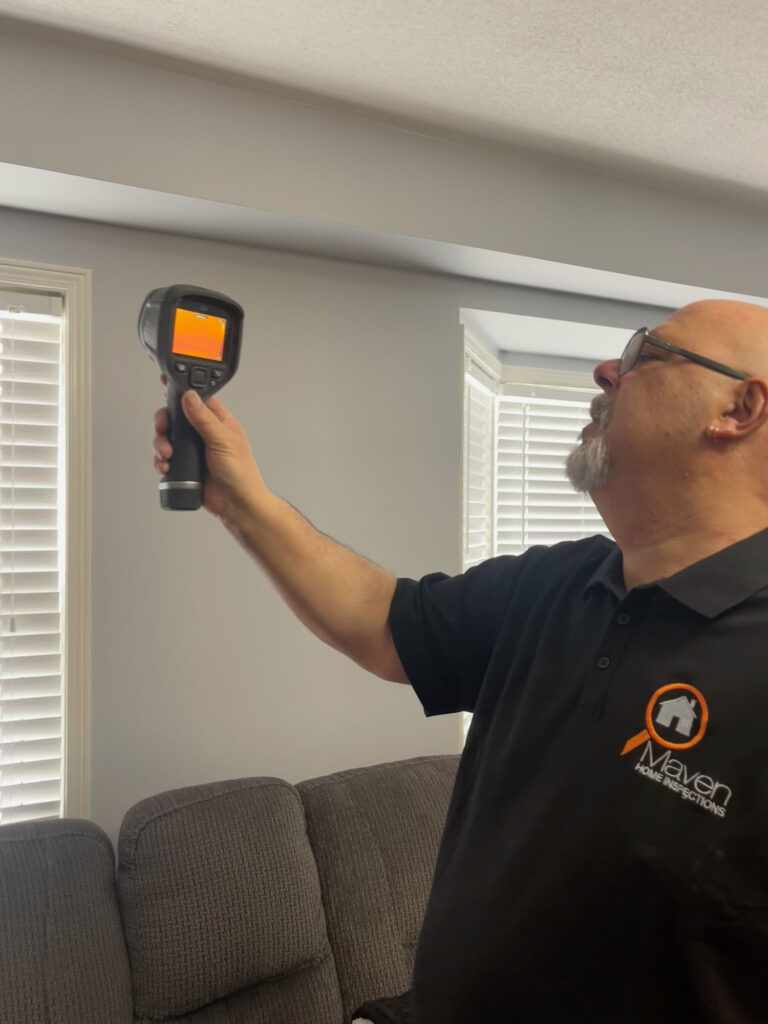
- Infrared Thermal Imaging (Add-on Service): I use thermal technology primarily as a moisture-detection tool. By identifying temperature anomalies behind surfaces, I can find potential moisture issues that haven’t yet surfaced as visible stains. It allows me to flag areas of concern for further evaluation before they become major liabilities.
- Eye-Stick Telescopic System: For roofs and high areas, I use a high-resolution camera with telescopic pole. This provides macro views and allows for real-time analysis where I can zoom in on specific points of concern and capture clear photos, all while staying safely on the ground for a more efficient and thorough review.
- Precision Moisture Meter: I don’t just guess if a stain is “old.” I use a professional-grade moisture meter to determine if a leak is active and ongoing; giving you a definitive answer on the spot.
- Electric Safety Testing: I utilize specialized circuit analyzers and non-contact voltage testers to ensure outlets are functional and wired correctly. This also enables me to quickly identify “hot” surfaces or wires that pose a potential safety risk.”
Construction background
I’ve repaired what I’m inspecting
When I see a crack, a stain, or a failed joint, I’m not guessing at the cause. I know how it was likely built, and where these things usually start.
Most inspectors learn buildings from the outside in. I learned them from the inside out.
Cause, not just symptom
Finding the problem behind the problem
A long list of findings isn’t always useful if you don’t know which ones are driving everything else. My job is to help identify the cause, so you know what actually needs fixing and what’s just a consequence of something else.
A wet basement is rarely a foundation problem. It’s almost always a grading or drainage issue: something outside the house, not below it. That distinction can save you tens of thousands of dollars.
Decision support
You leave knowing what to do
The report is a record. The walkthrough is where the real value is. I go through every significant finding with you in person: what it is, how serious it is, what to do about it and whether it should change your decision about the property.
Buyers who’ve had other inspections often say they felt more informed after 20 minutes on-site with me than after reading a 60-page report elsewhere.
From the Field
The kinds of things that show up in a real inspection.
These are common findings, not rare ones. Many get missed entirely when an inspector doesn’t know what they’re looking at or hasn’t built anything before.
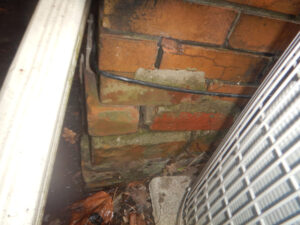
Structural · Masonry
Mortar Failure at Porch Column
Freeze-thaw cycles eat through older mortar over time. A compromised column base can fail structurally, including the porch roof it supports. This one needed more than caulking.
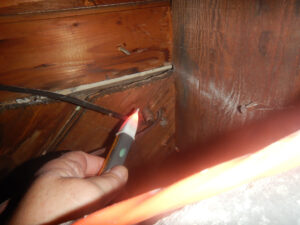
Electrical
Active Knob & Tube Wiring
Common in older homes, and often supposedly “remediated,” but still live in attics, hallways, or porches where access is difficult. Most insurers require a full electrician’s certificate before providing coverage.
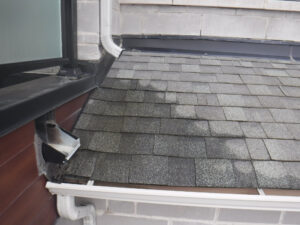
Roofing · Drainage
Downspouts Discharging onto Lower Roofs
The concentrated water flow wears out the shingles or membrane in that zone years ahead of schedule. Often invisible until you actually get on the roof.
Exterior · Weatherproofing
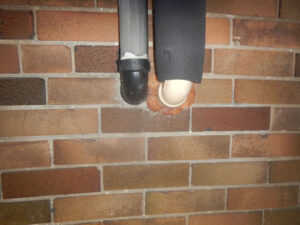
Spray Foam at Exterior Penetrations
Spray foam is an air barrier, not a moisture barrier. Pipe and wire penetrations sealed only with foam will eventually allow water infiltration. Caulking is required over top, and rarely present.
Safety · Exterior
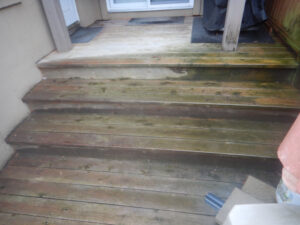
Missing Stair Handrail
Required on any stairs with more than 3 risers or wider than 44 inches. One of the most common deficiencies found, and an easy one to overlook.
Exterior · Windows
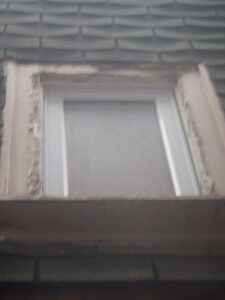
Neglected Wood Frame Windows
Older wood windows need regular painting to stay watertight. Peeling paint is an early warning. By the time moisture shows up inside, the damage is typically behind the wall.
Plumbing
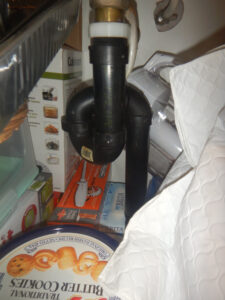
S-Trap Drain Configuration
Not approved under current plumbing code. Often not causing an active problem, but present in a large percentage of older homes and worth documenting for the record.
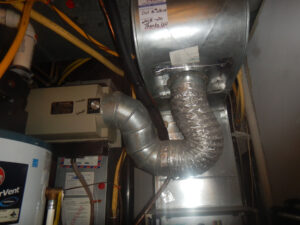
Mechanical · HVAC
Aging Mechanical Systems
Service labels, equipment age, and installation quality tell me what’s likely to need attention in the next few years. A 20+ year old furnace or water heater is a budgeting conversation, not just a checkbox.
A Common Misdiagnosis
Where wet basements actually start.
Most homeowners, and many inspectors, treat a wet basement as a foundation problem. It rarely is. Foundations are what I call “diagnostic structures”: they show symptoms, they don’t usually cause them.
Looking up and out saves you thousands on down and in repairs. A $50 bag of dirt and a shovel often solves what a $10,000 contractor won’t.
The 90/5/5 Rule
Where Wet Basements Actually Come From
Before spending $10,000 on waterproofing, understand where moisture actually originates. The answer is almost always outside, not below.
† The 90/5/5 estimate reflects industry patterns observed across thousands of residential inspections in the GTA. Always confirm with a site-specific diagnostic assessment.